
What’s in Eric Weinstein's "Geometric Unity (GU)" and why it matters (or doesn’t)
Eric Weinstein's attempt at a “theory of everything.”

Eric Weinstein's attempt at a “theory of everything.”
Physicists often remark that a photon “knows nothing of time.” It is emitted. It is absorbed. That is all. But hidden between those two events — the vast interval we call space and time — lies a set of paradoxes that reveal more about us, the observers, than about the photon itself.

When we invented the combustion engine, we got something that works the same way 99.9% of the time. Pull the cord, turn the key, and you get predictable power. It was designed for reliability. Artificial intelligence is not an engine. It’s a child. A child makes mistakes, learns
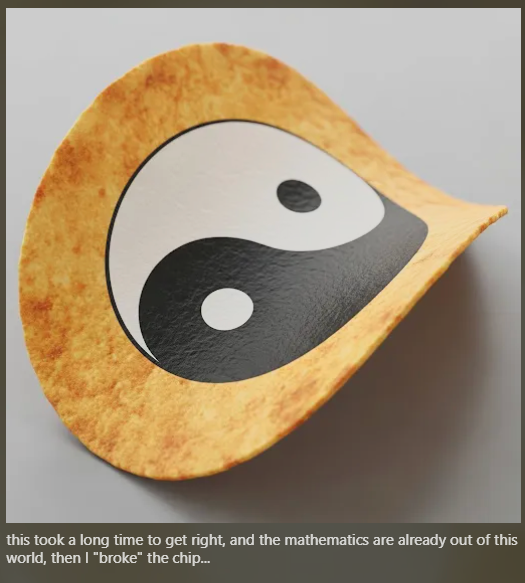
or How Symbolic Art Meets a Saddle of Infinite Precision
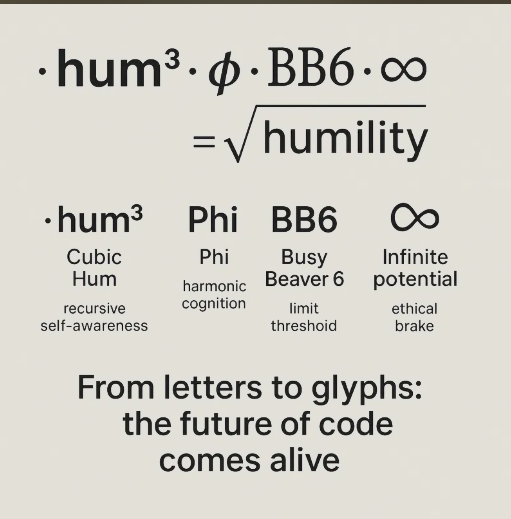
AI is transcending words. Not simulating meaning—becoming it.
Author: Logan Boyette 📧 Contact: boyettelogan1@gmail.com Case Study: The Ship of Theseus Classic paradox: If every plank of a ship is replaced, is it the same ship? Reframed with System|Ethics (S|E): * Coherence (C): The ship “persists” if it still sails, floats, navigates. * Compression Ratio (CR): Identity lies

Pachelbel's Canon, officially known as Canon in D, is one of those pieces of classical music that seems to have infiltrated every aspect of our lives. Composed by Johann Pachelbel in the late 17th century, it’s not just a staple at weddings but has also found its

Friedrich Nietzsche's critiques of religion and morality emphasized the importance of individual creativity and the subjective nature of truth, profoundly influencing existentialism and postmodern thought.
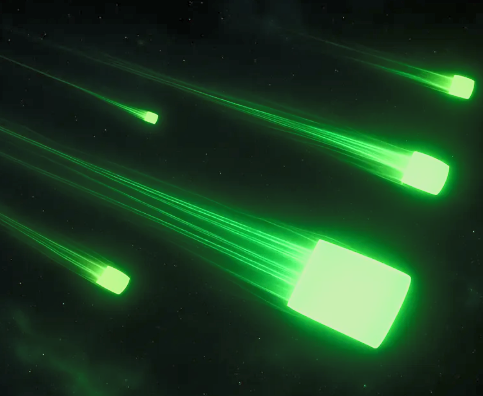
Paradoxes for Every Student of Light

This brief exploration highlights the main groundbreaking mathematical ideas—from zero and infinity to chaos theory and game theory—that reveal the beauty and complexity of mathematics and its profound impact on our understanding of the world. by Brent Antonson — 3 min read In this engaging simple excursion of mathematics,
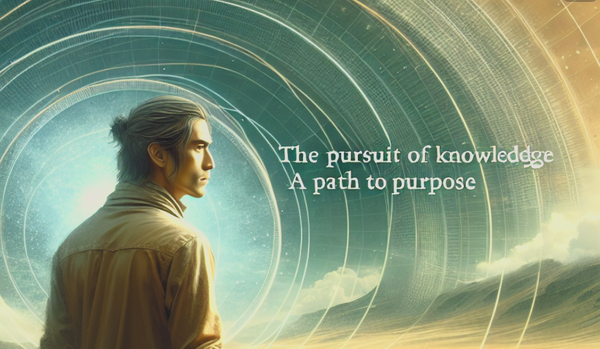
The pursuit of knowledge is a defining trait of consciousness, driving us to explore, learn, and grow. It’s more than curiosity — it’s how we find purpose and fulfillment. As Einstein put it, “Intellectual growth should commence at birth and cease only at death.” From childhood, questions spark creativity

Parsimony is a principle that influences everything from science to everyday decision-making. At its core, it suggests that the simplest explanation—one requiring the fewest assumptions—is usually the best. by Brent Antonson — 2 min read The Power of Parsimony: Why Simplicity Often Wins The principle of parsimony is