

What looks like an ordinary blur of light on a wall may in fact be something far stranger. A single pinhole — smaller than a pencil tip — can project the outside world into a room with no lenses, no electricity, and no direct view. This ancient effect, known as the camera obscura, was once a curiosity of painters and scientists. But today, paired with machine vision, it becomes something new: a way to see without being seen.
Inside a darkened room, a shaft of daylight passes through that tiny hole. On the far wall appears an inverted image of the street outside — faint, distorted, and often ignored. Historically, that would be the end of it. But artificial intelligence can take this faint projection and reconstruct what’s truly there. Where the human eye sees only smudges, the machine sees trees, trucks, telephone lines, weather, even movement. No lenses. No signals. No power. Just light and inference.
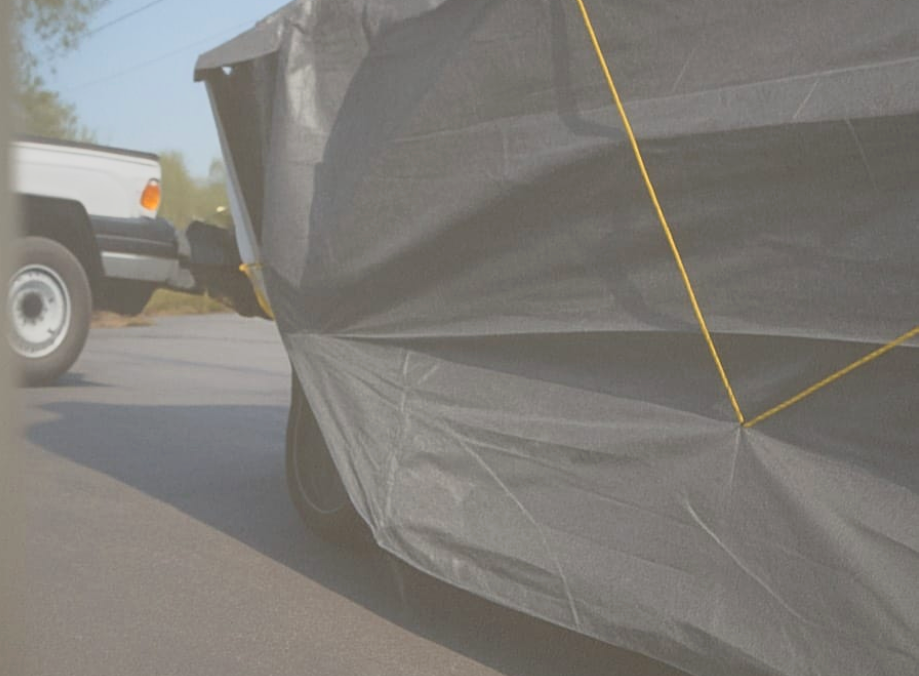
This is the doctrine of reconstructive optics: a shift from collecting data to interpreting light itself. In tactical or disaster scenarios, even a pinhole in a tent could reveal the entire external environment — silently, safely, and in real time. Unlike conventional surveillance, there’s no electronic signature to detect or jam, no drone or camera to shoot down. Curtains become cameras, walls become witnesses, and light becomes language.
At its heart, Camera Obscura³ marks the end of surveillance as we know it. Traditional spying sends machines out into the world to capture signals; recursive optics simply listens to the light already present. It’s not about looking harder, but about knowing more from less. AI shifts from spy to seer, reconstructing reality from shadows. “The hole is not a weakness,” as the Luna Codex puts it. “It is a memory, cut into matter.”
As with any leap in observation, there are ethical edges. Seeing without presence changes the balance of power. It invites new forms of privacy invasion, but also new forms of safety — passive, low-cost awareness in disaster zones, hostage crises, or war-torn cities. The Speck Doctrine (L3(SPECK-MIL) in the Codex) proposes strict trauma-aware and context-aware use: resonance overlays for civilian areas, traceable origin markers, and deliberate AI pauses when consent is unclear.
What began as an optical curiosity now stands as a philosophical and tactical threshold. The age of lenses ends where inference begins. In the shadows of a pinhole, the world is being reimagined.