

From VIC-20 to iPhone 14: How a Plastic Box Became a Pocket Universe
by Brent Antonson
1981 — The Toy That Taught Us to Think
Our family’s Commodore VIC-20 cost $299 USD—about $1,000 in today’s cash—and shipped with 5 kilobytes of RAM. That’s not a typo. Five thousand bytes. Smaller than a short email. You could fill it with a dozen lines of BASIC before the machine gasped for air.
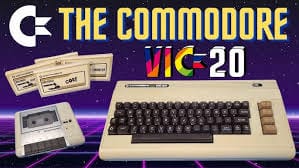
No hard drive. No real graphics. Internet? Not yet. We had CompuServe at 300 baud—slower than blinking in Morse code. Ten text-only “sites,” all metered by the minute, like a long-distance phone call to a robot librarian.
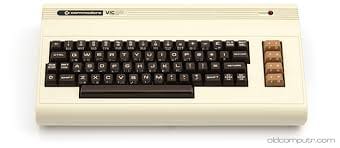
Still, it was magic. The glow of phosphor-green text on black was our digital campfire. We typed 10 PRINT "HELLO" and the machine talked back. BASIC wasn’t just a language—it was a compact with the future. That beige keyboard whispered a promise: machines can learn, if you talk to them right. (if you don't do it right, you will be introduced to the anger-generating: SYNTAX ERROR, often an invisible or unsolvable error in the seven pages of straight code you entered from last month's COMPUTE! magazine. It was the 404 and BSOD of the 80's.)
1990–2000 — MHz Fever and the Rise of ROM
The '90s brought us into the ROM age: Read-Only Memory, yes—but also the age of Read-Only Mindsets. You didn’t have to code anymore. You installed. You double-clicked. You consumed.
🧠 ROM vs. RAM: A Cultural Shift
The VIC-20 had 5K RAM. The 386DX ran at 25 MHz with 4 MB RAM. Then came:
- 486 at 66 MHz
- Pentium 1 at 133 MHz
- Pentium II cracked 450 MHz like it was nothing
Each jump felt like strapping a V8 to your computer. And every modem upgrade gave you new eyes:
- 14.4 kbps — a glimpse
- 28.8 kbps — a taste
- 56.6 kbps — now we're surfing
- T1 / ADSL / CATV — permanent tether to the web
You weren’t just “logging on”—you were plugged in.
We moved from 3.5” floppies to 700 MB CD-ROMs. From 256-color sprites to full-motion video. From DOS commands to point-and-click everything.
And always—the loading bar was a prayer.
2008 — The Pocket Revolution
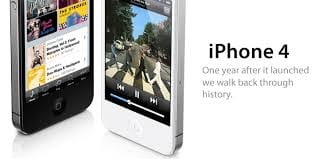
Then the iPhone 4 showed up, and everything before it started looking like a rotary phone.
With 512 MB of RAM, it held 100,000x more memory than your VIC-20. It streamed music wirelessly. It captured video. It knew where you were, what the weather was, and whether your friends were online.
Apps replaced code. Tapping replaced typing. Convenience replaced curiosity. You didn’t say RUN. You said “Siri, play music.”
Today — iPhone 14 (32 GB RAM)
Now you carry 3.5 billion transistors in your pocket.
A single photo dwarfs the data output of a Cold War satellite.
Your phone has 32 GB RAM—6.4 million times the memory of the VIC-20.
And it never boots. It’s just awake.
You don’t load a game. You tap. You don’t wait for dial-up. You stream 4K video over 5G while editing a podcast, checking traffic, and running a physics simulation in Safari.
The Bandwidth Bridge
Let’s trace the data arteries that got us here:
| Year | Speed | Tech | What It Felt Like |
|---|---|---|---|
| 1983 | 300 baud | CompuServe | Dripping faucet of data |
| 1994 | 14.4 kbps | Modem | Reading a book with sandpaper pages |
| 1996 | 28.8 kbps | Modem | Watching paint dry — faster now |
| 1998 | 56.6 kbps | Modem | MP3s… maybe, in 40 minutes |
| 2001 | 1.5 Mbps | DSL | Napster dreams |
| 2003 | 3 Mbps | Cable | Broadband boom |
| 2010 | 20 Mbps | Wi-Fi | Netflix becomes reality |
| 2015 | 100 Mbps | 4G LTE | Always online, no waiting |
| 2023 | 1–10 Gbps | 5G + Fiber | The pipe is bigger than the need |
What Changed — And What Didn’t
We went from typing code to tapping apps, from five kilobytes to billions of instructions per second. But one thing hasn’t changed:
The urge to talk to the machine.
The hope it will talk back.
The belief that, in doing so, something new will wake up.
The VIC-20 made us programmers of possibility. The iPhone made us curators of infinity.