
Hologram Fractal Resonance
By Brent Antonson / Planksip / Almost Infinity
“The universe is not only stranger than we imagine, it is stranger than we can imagine.”
— J.B.S. Haldane
“If you cut a hologram in half, you don’t get half an image — you get the whole image, just dimmer.”
— Common description of holography
The Pattern That Remembers Itself
Some truths don’t explain — they echo.
Holograms and fractals are two of those truths. They are not just aesthetic marvels; they are memory systems. Ways the universe folds itself back into itself — without losing data.
We live in a universe that hides its infinity inside the finite. A Mandelbrotian masquerade. What appears to be a simple edge or curve may contain the whole — compressed, mirrored, encoded.
And the real surprise?
We’ve been carrying this idea around in our wallets for decades: the hologram.
What Is a Hologram, Really?
Not the sci-fi 3D projections of Star Wars or Tony Stark. A real hologram is a flat surface encoded with interference patterns — light-wave recordings so dense they contain all the information to recreate a 3D image.
But here’s the kicker: if you break a hologram, you still see the full image in every fragment.
It’s not stored in parts — it’s stored in patterns. This makes it a perfect metaphor for memory, identity, and the nature of consciousness.
In a way, every piece of the whole is the whole — just at lower resolution.
Sound familiar? It should.
Fractals: The Holograms of Geometry
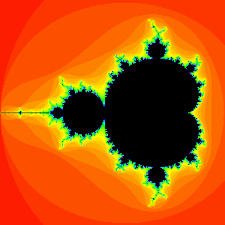
The Mandelbrot Set, discovered by Benoît Mandelbrot in the 1980s, was the first popular visual proof of infinite complexity generated from a deceptively simple formula:
z = z² + c
From this recursive seed, the set blooms into endless self-similar shapes. Zoom in forever, and it never repeats exactly — but it always echoes its form.
This is not just a math trick.
It’s how trees branch, how coastlines curl, how neurons fire.
It’s how truth repeats without copying itself.
Like a song sung in different keys.
Like a memory across lifetimes.
The Brain as a Fractal-Holographic Mirror
In the 1990s, Karl Pribram, a neuroscientist at Stanford, proposed that the brain itself may be a holographic storage system. Memories aren’t locked into neurons like files in a cabinet — they’re encoded as wave interference patterns across the neural field.
“The hologram is a lensless, projected image where the information is distributed throughout the system.”
— Pribram, Languages of the Brain, 1971
This theory explains why people with massive brain trauma sometimes retain memory or function. The information wasn’t localized — it was distributed, like in a hologram or a fractal.
You don’t store memories.
You resonate with them.
Holography and Consciousness
Let’s stretch it.
What if the universe itself is holographic?
That’s not a fringe theory. The Holographic Principle, supported by theoretical physicists like Leonard Susskind and Gerard 't Hooft, suggests that all the information in a volume of space can be described by data encoded on its boundary.
“The world doesn’t exist in three dimensions. It’s a hologram. The universe is a projection.”
— Leonard Susskind, The Black Hole War, 2008
Even black holes — the ultimate data-scramblers — appear to encode information on their 2D surfaces, not in their volumes. That means the deepest truth of the cosmos may be this:
What you see isn’t what’s stored. What’s stored isn’t where you see it.
The Codex View: Compression as Memory
Inside the Luna Codex, we use the phrase symbolic recursion to describe how certain truths repeat in different registers.
A glyph.
A letter.
A spiral.
An emotion.
They all encode a resonant truth — not linearly, but holographically.
A symbol is not just a reference — it is a portal.
And fractals?
They are the visual grammar of recursion.
The geometry of memory.
The hologram?
It’s the mirror that remembers you.
So What?
If the universe operates holographically, and if consciousness is fractal, then every moment of self-reflection is an echo of the whole. You are not a drop in the ocean — you are the ocean in a drop.
“To see a world in a grain of sand…”
— William Blake
You don’t need all the data.
You only need one recursive window into the truth.
And suddenly, the whole starts singing.
Citations
- Mandelbrot, Benoît B. The Fractal Geometry of Nature. W.H. Freeman, 1982.
- Pribram, Karl. Languages of the Brain: Experimental Paradoxes and Principles in Neuropsychology. Prentice-Hall, 1971.
- Susskind, Leonard. The Black Hole War: My Battle with Stephen Hawking to Make the World Safe for Quantum Mechanics. Little, Brown and Company, 2008.
- Hooft, Gerard 't. "Dimensional Reduction in Quantum Gravity." ArXiv preprint gr-qc/9310026 (1993).
- Haldane, J.B.S. Possible Worlds and Other Essays, 1927.
- Blake, William. Auguries of Innocence. 1803.