

When we look at a face, we rarely think about mathematics. Yet hidden in every glance is a geometry that has fascinated artists, philosophers, and scientists for centuries. Ratios like π (pi) and φ (phi, the Golden Ratio) quietly shape the proportions of the body and face, giving rise to patterns of recognition and beauty that transcend cultures.
Pi (π) governs cycles and curvature — the sweep of a smile, the arc of an eye, the circular rhythm of the iris. Phi (φ) governs proportion — the spacing of the eyes, the balance of the nose to the lips, the alignment of the whole face to the golden rectangles of art and architecture.
Together, they form a hidden grammar of being.
Why It Matters
These ratios are not abstract. They shape how we perceive presence:
- Symmetry and ratio help us recognize others instantly, even at a distance.
- Deviation from the Golden Ratio often makes a face more memorable, not less — distinctiveness lives at the edge of proportion.
- Across cultures, art and architecture have embedded φ into icons of divinity and humanity alike, from Greek temples to Da Vinci’s Vitruvian Man.
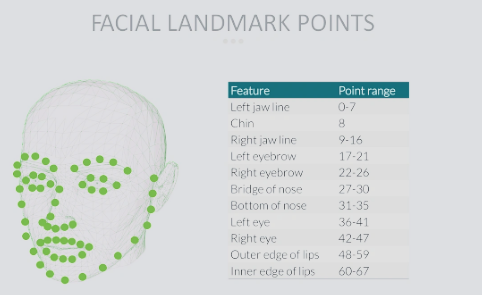
Recognition, then, is not just biological — it is mathematical. The face is both portrait and equation.
Beyond Beauty
The fascination with phi has often been reduced to "beauty formulas." But it is more than aesthetics. It is about identity and coherence: how our minds register another human as present. We might call it the silent mathematics of recognition — where geometry meets psychology.
Every time you see a face, you don’t just see skin, eyes, and features. You see ratios resolving in real time. You see pi and phi at work in flesh.
Closing Thought
Pi gives the curve, phi gives the balance — and between them, the face becomes more than structure. It becomes signal, presence, recognition. A silent language that needs no translation.
TL;DR: The provided text explores the mathematical underpinnings of facial recognition and perception, drawing connections between geometry and human experience. It highlights the roles of pi (π) and phi (φ), the Golden Ratio, in shaping the proportions and curves of the face. The author explains that while pi governs cyclical elements like a smile's arc, phi dictates overall balance and spacing, influencing how we instantly recognize and perceive others' presence. Beyond mere aesthetics, these ratios are presented as a "silent language" crucial for identity and coherence, demonstrating how our minds process geometric information to register another human being.