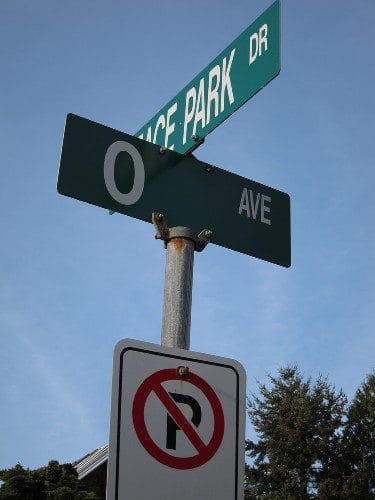

Zero Avenue: The Cure for Insomnia
Insomnia is a common sleep disorder that can make it hard to fall asleep, hard to stay asleep, or cause you to wake up too early and not be able to get back to sleep. For me, it feels like the urge to drive.
Since I was about five years old, I've had insomnia. Now, I wake up briefly and do what I call my 3 a.m. loop. I live in Vancouver, Canada, just minutes from the American border. I take the highway near my house and cruise down to the 24-hour drive-through for a coffee. Then I head south, tracing the empty freeway to the last Canadian exit before the U.S. line. U-turn. Return. Thirty minutes of motion through God's Parking Lot.
This corner of the Lower Mainland is a priceless confluence of ocean, mountains, extinct volcanoes, and international borders. The 49th parallel — the actual point of entry into America — is just twenty kilometers away. On this dark freeway, passing Mt. Baker, the Pacific Ocean, and the silhouettes of the Gulf and San Juan Islands, I am alone in the world. And the world is perfect.
Everyone should visit Vancouver just for this triangular stretch of land I call home. It's known as "Spectacular by Nature." But like every other metro, the daytime traffic is hell. That's why I go when the cornucopia of bad drivers are asleep.
Insomnia has many causes. I’d put caffeine first. An excess of Coke Zero or any late-night stimulant will do it. But even without the buzz, I’ve learned to embrace this time. It’s when my anxiety sleeps. After three car accidents in three years — none my fault — I lost the passion I had for driving. But this route? This loop? It brings it back. No honking, no tailgaters, no sudden lane merges. Just the hum of my WRX and the rhythm of the road.
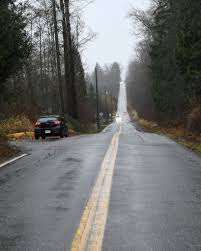
I call this route my Bible. It’s not a metaphor. The road is my sacred text. Especially Zero Avenue, which runs along the border itself. Drive it, and you’ll see the old metal demarcation markers: one side says CANADA, the other AMERICA. No fences. Just forest. Sometimes, to get the full view, you walk around them — which technically means you've crossed the border illegally. I point this out to friends when we stop for photos: "Congratulations. You’ve committed gluttony, invasion, and a possible war crime — all while birdwatching."
If you’ve never seen it, picture this: you’re in Canada, on a quiet rural road. Ten feet away, a man in America is checking his mailbox. Entirely different lives. Same trees. Same clouds. Different countries.
The Peace Arch, where the main border crossing stands, says "May these gates never close." They did during COVID. The symbolism stuck with me. It’s as if the world blinked and forgot we’re neighbors.
I’ve done this 3 a.m. drive almost 500 times since the pandemic began. It’s therapy. It’s ritual. It’s mine. And maybe it should be yours.
Go out at 3 a.m. Drive the freeways without the noise. Chicago, Toronto, Miami, Los Angeles, Tokyo, Beijing, London — it doesn’t matter. If your city has asphalt and silence, you've got the raw ingredients for meditation.
We all need a road that forgives us. Mine just happens to cross a border.