Three Russian Prisons: Dostoevsky, Solzhenitsyn, and Me
Three Russian Prisons: Dostoevsky, Solzhenitsyn, and Me
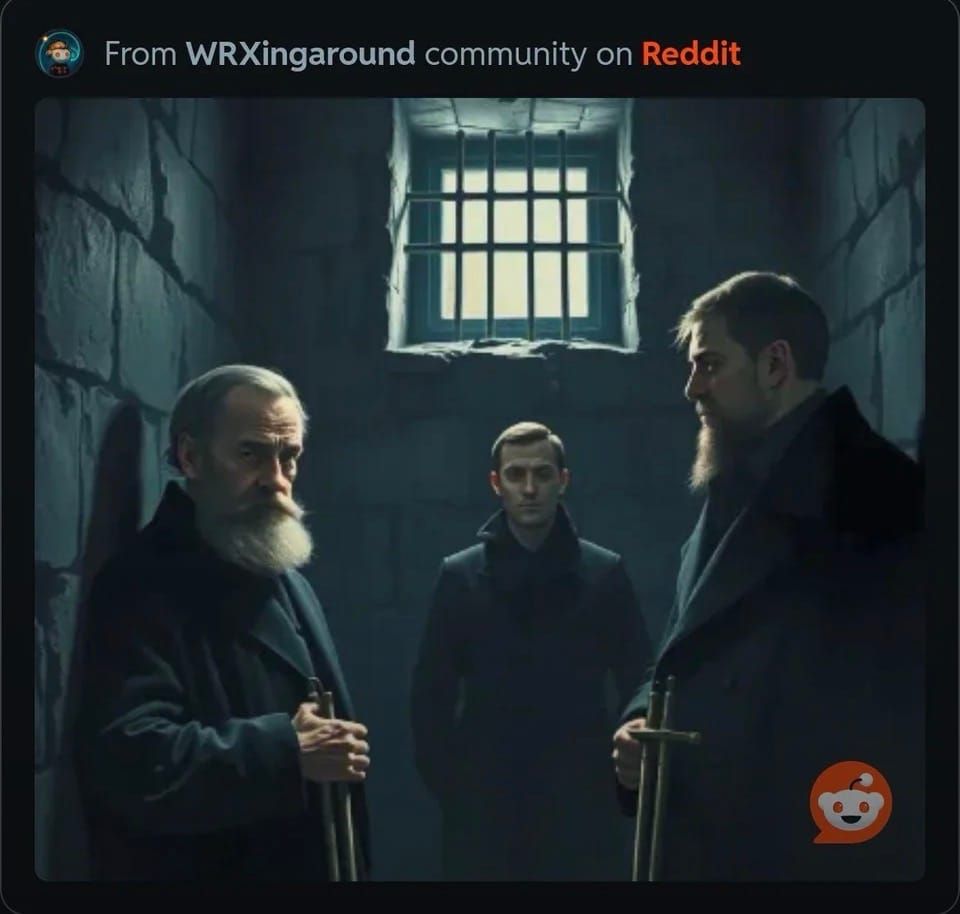
It is unlikely we would fully understand the brutality of Russian imprisonment without the testimony of those who endured it. Fyodor Dostoevsky and Aleksandr Solzhenitsyn gave the world two of the most important literary accounts of incarceration under Russian authoritarian rule. I offer, on a far smaller scale, an anecdotal third.
Fyodor Dostoevsky’s The House of the Dead (1860) emerged from his years in a Siberian labor camp and exposed the psychological and physical horrors of imprisonment under the tsars. More than a century later, Aleksandr Solzhenitsyn’s One Day in the Life of Ivan Denisovich (1962) revealed the daily brutality of Stalin’s gulag system. Though separated by a hundred years, both works illuminate the same enduring truth: authoritarian power often treats human dignity as expendable.
My own book, Of Russia: A Year Inside, recounts my experiences teaching English in Voronezh in 2001, including a brief but unforgettable encounter with the Russian prison system.
Authoritarianism: the enforcement of strict obedience to authority at the expense of personal freedom.
Dostoevsky grew up immersed in literature, religion, and philosophy. Though trained as a military engineer, his true calling was writing. His political interests led him into the Petrashevsky Circle, a group that discussed censorship, liberty, and the abolition of serfdom—dangerous ideas in Imperial Russia.
For this, he was arrested and sentenced to death.
On the day of his execution, Dostoevsky stood before a firing squad believing he had only moments left to live. Rifles were raised. Death seemed certain. Then, at the final moment, a messenger arrived bearing the Tsar’s pardon. The execution had been staged—an act of psychological torture. Instead of death, Dostoevsky received four years of hard labor in Siberia followed by compulsory military service.
He later described prison in unforgettable terms:
“In summer, intolerable closeness; in winter, unendurable cold… We lived like pigs.”
The experience transformed him. After prison, he wrote twelve novels, including Crime and Punishment, perhaps the greatest literary examination of guilt, conscience, and psychological collapse ever written.
His genius lay in exposing what human beings become under pressure—morally, spiritually, and psychologically.
“To go wrong in one’s own way is better than to go right in someone else’s.”— Fyodor Dostoevsky
A century later, Aleksandr Solzhenitsyn exposed another prison system.
A decorated Soviet officer during the Second World War, Solzhenitsyn was arrested for criticizing Joseph Stalin in a private letter. That alone earned him eight years in the gulag.
His novella One Day in the Life of Ivan Denisovich portrayed the crushing monotony and cruelty of camp life: freezing labor, starvation, surveillance, and the slow erosion of self. Later, his monumental The Gulag Archipelago documented the Soviet prison system with devastating force.
“When you take everything from a man, he is no longer in your power—he is free again.”— Aleksandr Solzhenitsyn
His work awakened much of the Western world to the scale of Soviet brutality and helped earn him the 1970 Nobel Prize in Literature.
My own encounter with Russian imprisonment came in 2001 while teaching in Voronezh.
It began innocently.
While cleaning my apartment, I discovered six undeveloped rolls of film containing photographs from Moscow, Saint Petersburg, my students, markets, and daily life. I had them all developed.
That was my mistake.
At the time, I did not fully appreciate how sensitive photography could be in Russia. Certain subjects—airports, police, military installations, and infrastructure—could attract unwanted attention.
Soon afterward, while showing the photographs to elderly neighbours in my apartment building, two police officers approached, confiscated the prints, and arrested me.
They marched me across the street to a small holding cell hidden behind a row of kiosks.
I sat there confused and frightened while groups of officers came and went, laughing as they examined my photographs. My Russian was limited. I could barely understand what was happening.
Night fell. Exhaustion overtook me.
I awoke in darkness inside the rear of a windowless police van. After several kilometres, the vehicle stopped at a precinct.
As I stepped out, an officer grabbed me by the collar and hurled me down a long flight of concrete stairs.
I lost consciousness.
When I came to, I was in darkness, covered in blood.
The beatings continued.
They stripped me to my underwear. Several men lifted me against a wall by my ribcage and dropped me repeatedly. They slammed their hands over my ears so violently that both eardrums ruptured, leaving me with tinnitus that persisted long afterward. They choked me, spat on me, dragged me across the floor, broke ribs, and damaged my sternum. At one point, I lost all sensation from the waist down.
Eventually, I was dragged before a senior officer.
One by one, we reviewed all 144 photographs and negatives.
That was when I understood the gravity of my situation.
Among the images were photographs of classrooms, students, markets, police officers, the airport, military vehicles, tanks, and personal photographs with girlfriends. What had seemed like harmless documentation looked very different through their eyes.
The Iron Curtain had collapsed politically.
But in that room, it felt very much alive.
When the review ended, they threw me back into the cell.
One officer sneered a single word:
Shpion.
Spy.
The beatings continued through the night.
At dawn, they returned my clothes.
My wallet was lighter by eighty U.S. dollars, and many of my photographs were missing.
I dragged myself up the same twelve stairs I had been thrown down the night before. My legs barely worked. Locking my knees, I forced myself upward and out into the street.
I was free—but concussed, bleeding, partially paralyzed, and broken.
I eventually made it back to my apartment, where my girlfriend had feared I was dead.
Later, the head of security at the institute where I taught visited the precinct seeking answers.
There was nothing.
No paperwork. No report. No record that I had ever been there.
That may be the most chilling part.
Prisons do not always require bars, files, or official documentation.
Sometimes all they require is power without accountability.
Dostoevsky gave us the prison of the tsars. Solzhenitsyn exposed the prison of Stalin. My experience taught me something equally unsettling: regimes change more quickly than institutions, and institutions change more quickly than instincts.
Authoritarianism survives by adapting.
And in Russia, that shadow has never entirely disappeared.